Few upgrades transform a home like a wall of glass that slides open to the outdoors. But once you start shopping for patio doors, you will run into two terms that sound almost the same and are anything but: the standard sliding door and the European lift-and-slide door. They look similar when closed. They behave completely differently the moment you go to open them.
At EuroWindows, we install both throughout Utah, Nevada, and Arizona. Understanding the difference will help you choose the right door for your space, your budget, and how you actually live. Here is the full breakdown.
How a Standard Sliding Door Works
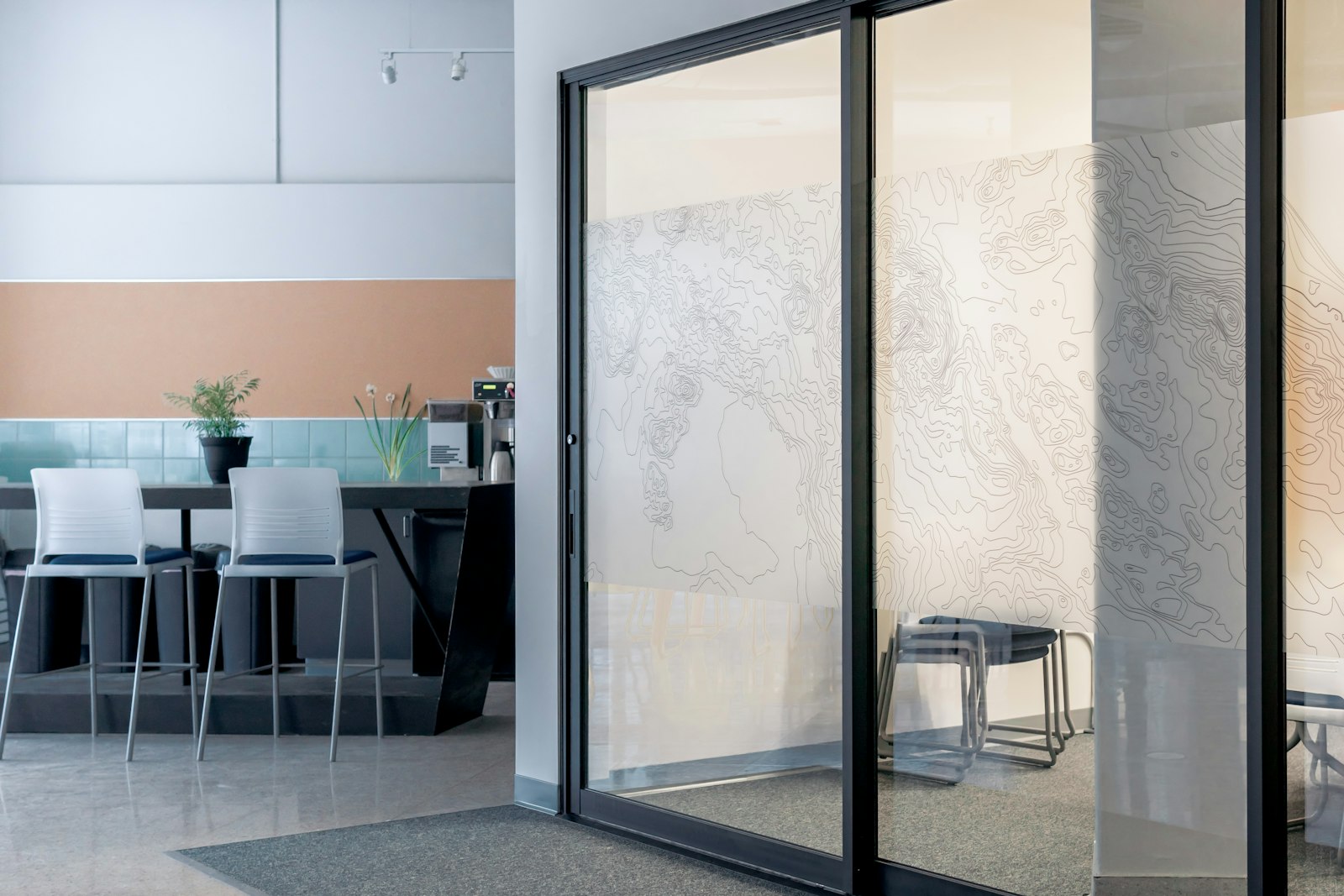
A conventional sliding patio door hangs from or rolls along a track, with one or more panels that glide horizontally past a fixed panel. The panel stays in constant contact with the track and weatherstripping as it moves, which is why it can take a firm push to slide — and why, over years of use, the rollers and seals wear and the door can start to drag.
Standard sliders are a proven, cost-effective choice. They open easily for everyday use and suit most homes well. Their main limitations are the effort required on larger panels and a weather seal that, by design, must stay loose enough to let the panel slide. Explore the range on our sliding doors page.
How a Lift-and-Slide Door Works
A lift-and-slide door is engineered to solve exactly those limitations, and the secret is in the handle. When the door is closed, the panel rests down on its seals, compressed tight against the frame for an excellent weather seal — no air, water, or dust getting through. Turn the handle and the entire panel lifts a few millimeters off its seals onto smooth rollers.
Once lifted, even a very large and heavy panel glides almost effortlessly with one hand — the weight rides on precision hardware rather than dragging across the track. Let go of the handle and the panel settles back down, locking into its tight seal. It is the difference between shoving a door and gliding it.
Side-by-Side Comparison
Ease of operation
Lift-and-slide wins on large panels. Because the panel floats on rollers when raised, a wide, tall, triple-glazed door moves with a fingertip. Standard sliders are perfectly easy at smaller sizes but get heavier to operate as panels grow.
Weather sealing and efficiency
Lift-and-slide has the clear edge. The compression seal when the door is down is far tighter than a sliding door’s running seal, which means better insulation, less air infiltration, and superior performance against wind-driven rain and desert dust. In our climate, that tight seal also helps keep cooling costs down.
Maximum size and glass
Lift-and-slide systems are built to carry much larger and heavier panels, making those dramatic floor-to-ceiling, wall-of-glass openings possible. Standard sliders have more modest size limits before operation becomes cumbersome.
Durability
Because the lift-and-slide panel is not dragging on its seals during everyday use, there is less wear over time. The seals are only engaged when the door is parked and closed, so they tend to last longer.
Cost
Standard sliding doors are the more budget-friendly option and an excellent value for typical openings. Lift-and-slide doors cost more, reflecting the advanced hardware and their large-format capability — you are paying for effortless operation and a premium seal.
Which Patio Door Is Right for You?
Choose a standard sliding door for a classic, dependable patio opening at a friendly price, especially at common sizes. Choose a lift-and-slide door when you want a large or oversized opening, the tightest possible weather seal, and the satisfying ease of gliding a big panel with one hand. If you are weighing other configurations, our folding doors open an entire wall accordion-style, while modern entry doors cover the front of the house.
Where Each Door Type Fits Best in a Home
Choosing between a standard slider and a lift-and-slide often comes down to the role the opening plays in your home. For a secondary patio, a laundry-room exit, or a modest balcony, a conventional sliding door is a dependable, cost-effective fit that opens easily and looks clean. Its strengths shine at everyday sizes, where the panel is light enough to glide without effort and the price advantage is most compelling.
Lift-and-slide doors come into their own at the heart of the home — the great room that opens onto a patio, the kitchen that flows to an outdoor kitchen, the master suite with a private terrace. These are the spaces where you want a large, uninterrupted expanse of glass, an effortless connection between inside and out, and the tightest possible seal when the door is closed against summer heat. The larger the opening and the more it matters to the way you live, the more a lift-and-slide justifies itself. Many homeowners use both in the same house, placing the premium system where it makes the biggest impact and standard sliders elsewhere.
Maintenance and Longevity
Patio doors live a hard life, sliding open and shut thousands of times and facing sun, wind, and dust. Both door types last longest with a little routine care: keep the track and sill clear of grit, wipe the rollers and seals, and occasionally apply a suitable lubricant to keep the action smooth. Because a lift-and-slide panel rests on its seals only when parked and rides on rollers when raised, its weatherstripping sees less wear during daily use, which tends to extend seal life. Standard sliders, with the panel in constant contact with the track, benefit especially from keeping that track clean so the rollers do not grind against debris. Either way, quality hardware and proper installation are the biggest factors in how long a door operates flawlessly.
Security and Glass Options
A wall of glass should never mean a compromise on security, and modern patio doors are engineered with that in mind. Multi-point locking, hardened strike points, and laminated or tempered safety glass make today’s doors far more secure than the flimsy sliders of decades past. Lift-and-slide systems in particular lock the panel down tightly at multiple points, making them difficult to force. On the glazing side, you can specify double or triple panes, low-E coatings tuned for our climate, and obscured or laminated glass where privacy or extra security is wanted — the same high-performance options found across our windows. For openings that fold an entire wall away, our folding doors are worth considering alongside sliding systems.
Frequently Asked Questions
Is a lift-and-slide door hard to operate?
Quite the opposite. Lifting the handle raises the panel onto rollers so even a very large, heavy door glides with one hand. The effort is famously light once you feel it.
Are lift-and-slide doors more energy efficient than standard sliders?
Yes. When closed, the panel compresses down onto a continuous seal, creating a much tighter barrier against air, water, and dust than a sliding door’s running seal — a real advantage in the desert Southwest.
How big can a patio door be?
Standard sliders have practical size limits before they become heavy to use, while lift-and-slide systems are built to carry much larger and taller panels, making dramatic floor-to-ceiling openings possible.
Which door is better for keeping out desert dust?
The lift-and-slide, thanks to its compression seal when closed. The tighter the seal, the less fine grit and outside air infiltrate your conditioned space.
Do these doors come with screens?
Yes, sliding and lift-and-slide doors can be fitted with screens so you can enjoy fresh air while keeping insects out.
Can I match my patio door to my windows?
Absolutely. We coordinate frame materials, colors, and glazing so your patio doors and sliding doors complement the rest of your windows for a cohesive look.
The Indoor-Outdoor Lifestyle in the Southwest
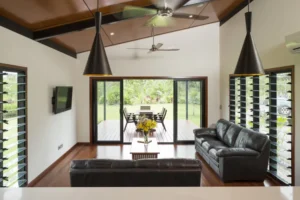
In Utah, Nevada, and Arizona, outdoor living is a year-round pleasure for much of the calendar, and the right patio door is what makes the connection seamless. A wide expanse of glass that slides away erases the boundary between the living room and the patio, flooding interiors with daylight and framing desert views and sunsets. For entertaining, an opening that disappears turns a great room and a patio into one continuous space; for everyday life, it brings the warmth and light of the outdoors in while a tight seal keeps the heat and dust where they belong when the door is closed. Choosing the configuration, glass, and frame that suit how you actually use the space — and the direction it faces — is what turns a simple door into the centerpiece of how your home lives.
Choosing the Right Patio Door for Your Home
The best patio door is the one matched to your opening, your climate, and the way you live. Think about how often the door will be used, how large you want the glass to be, and how much the connection between indoors and out matters to the space. In the Southwest, the tightness of the seal is worth weighting heavily, since it affects both comfort and cooling costs through the long summer. A standard slider is a dependable, cost-effective choice at everyday sizes, while a lift-and-slide rewards larger openings with effortless operation and a premium seal. We help homeowners across our service areas weigh these trade-offs and choose a door that fits both the architecture and the lifestyle of the home.
See the Difference in Person
The easiest way to understand lift-and-slide is to operate one — the glide is hard to believe until you feel it. We install patio doors across our service areas in Utah, Nevada, and Arizona. Contact EuroWindows for a free consultation and quote, and we will help you choose the door that fits your opening and your lifestyle.
European Patio Doors Near You
EuroWindows installs sliding and lift-and-slide patio doors across the Southwest. Explore your local options for sliding & lift-and-slide doors in St. George, Salt Lake City, Las Vegas, and Phoenix — or call (435) 899-9862 for a free, no-pressure quote.
See our European sliding doors and lift-and-slide options.