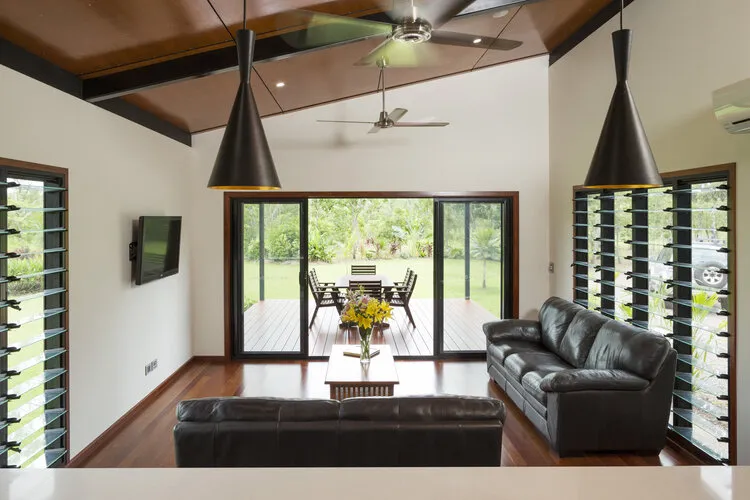
Jalousie windows — also called louvered windows — are made of parallel slats of glass, metal or wood that tilt open and closed in unison, like a set of blinds. A single crank rotates every slat at once, letting you dial in exactly how much air flows through. Once common in mid-century and tropical homes, jalousie windows are prized for ventilation but have real trade-offs in energy efficiency and security. Here’s how they work, where they shine, and the modern European alternatives worth considering.
What Is a Jalousie Window?
A jalousie window (from the French word for “jealousy”) is a window built from horizontal slats held in a metal frame. Turning a crank pivots all the slats together, opening angled gaps that scoop in breeze while shedding rain. Because the slats can be cracked just slightly or opened fully, jalousie windows give you fine control over airflow that few other window styles match.
How Jalousie Windows Work
Each glass slat sits in a clip connected to a shared operating arm. When you turn the crank handle, the arm rotates every slat to the same angle at the same time. Open, the slats form a louvered screen that ventilates a room from top to bottom; closed, they overlap to form a solid-looking pane. There’s no sash to slide or swing, so jalousie windows work well in tight spots where a projecting or sliding window wouldn’t fit.
Jalousie Windows: Pros and Cons
Advantages:
- Excellent ventilation — open the full height of the window for maximum airflow.
- Rain-friendly — angled slats let you keep windows open during light rain.
- Precise control — crack them an inch or open them wide.
- Space-saving — nothing projects in or out when operating.
Drawbacks:
- Poor energy efficiency — the many slats leave gaps that leak air, a real problem in hot desert or cold winter climates.
- Weaker security — individual slats can sometimes be removed, so they’re rarely used on ground-floor openings.
- Air & dust infiltration — they don’t seal like a modern gasketed window.
Are Jalousie Windows a Good Choice Today?
In mild, breezy climates — think coastal or tropical — jalousie windows still make sense for porches, sunrooms and utility spaces where ventilation matters more than insulation. But in the hot summers and cool winters of Utah, Nevada and Arizona, their loose seals drive up heating and cooling costs. If your goal is fresh air and an airtight, energy-efficient home, a modern European window will serve you far better.
The Modern Alternative: Tilt-and-Turn & Casement Windows
European tilt-and-turn windows deliver the ventilation people love about jalousies without the energy penalty. Tilt the sash inward from the top for secure, weather-protected airflow, or swing it fully open like a door — all with multi-point seals that lock out drafts, dust and noise. Casement windows are another strong option: they crank open like a jalousie’s handle but seal tight against a gasket when closed. Both are dramatically more energy efficient in desert climates than louvered glass.
Frequently Asked Questions
Are jalousie windows energy efficient? No. The gaps between slats leak conditioned air, which is why most energy codes and modern builders avoid them in favor of sealed casement or tilt-and-turn windows.
Can you replace jalousie windows? Yes. Jalousie windows are commonly replaced with casement, tilt-and-turn or single-hung windows to improve efficiency and security. The opening is usually a straightforward retrofit.
Are jalousie windows secure? Less so than sealed windows — because slats can be removed, they’re best avoided on accessible ground-floor openings.
Upgrade From Jalousie to European Windows
If you’re replacing old louvered windows, EuroWindows can help you choose an energy-efficient European window that ventilates beautifully and seals tight. We serve St. George, Cedar City, Las Vegas, Salt Lake City and Phoenix. Get a free quote or explore our complete guide to European windows.