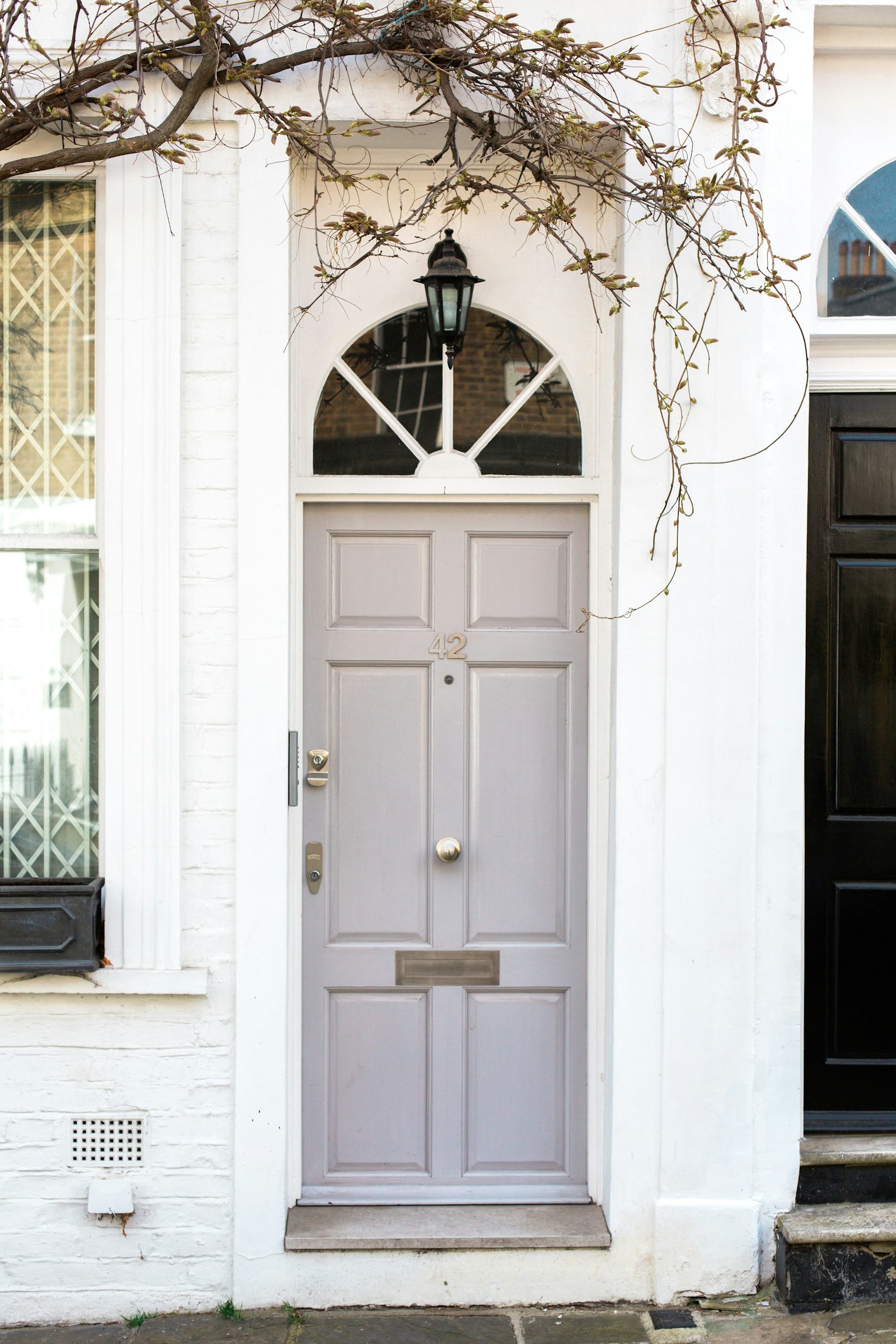
To tell the swing of a door, stand on the side the door opens toward you. Look at the hinges: hinges on the left mean a left-hand door, hinges on the right mean a right-hand door. The handle is always on the side opposite the hinges.
Door “handing” or “swing” describes which way a door is hinged and which direction it opens. Getting it right matters when you order a new entry door, so it fits your opening, clears furniture, and locks the way you expect. Here is the simple way to figure it out.
How to Tell the Swing of a Door (Step by Step)
1. Stand on the side the door swings toward you — the side where you pull it open. (Builders call this the “key side” or the side you secure from.)
2. Look at which side the hinges are on. Hinges on your left = a left-hand door. Hinges on your right = a right-hand door.
3. Confirm the handle is opposite the hinges. The knob or lever always sits on the far side from the hinges.
Left-Hand vs. Right-Hand Doors
The only difference is the hinge side when viewed from the side the door opens toward you. A left-hand door hinges on the left and opens to the left; a right-hand door hinges on the right and opens to the right. Manufacturers use this to build and pre-hang the door correctly, so always state the handing when ordering.
Inswing vs. Outswing
Handing also includes whether the door is an inswing (opens into the room) or an outswing (opens outward). You will sometimes see “left-hand inswing” or “right-hand outswing.” Outswing doors can offer better weather sealing and save interior space, while inswing doors are the traditional choice for most front entries.
Why Door Swing Matters
Choosing the correct swing keeps the door from blocking walkways or furniture, places the lock where you can reach it, and ensures hardware and weatherstripping seal properly. If you are replacing a door, match the existing handing unless you specifically want to change how the space works. Need help measuring or choosing? Contact EuroWindows for a free consultation on European entry and pivot doors.
Door Swing Chart: Left Hand vs Right Hand Door at a Glance
Use this door swing chart to identify any door’s handing in seconds. Stand on the outside — the side you push to enter — and match your door to the row below. It’s the fastest way to settle the left hand vs right hand door question before you order.
| Handing | Hinges on | Handle on | How it opens |
|---|---|---|---|
| Left-hand (LH) | Left | Right | Swings away from you (inswing) |
| Right-hand (RH) | Right | Left | Swings away from you (inswing) |
| Left-hand reverse (LHR) | Left | Right | Swings toward you (outswing) |
| Right-hand reverse (RHR) | Right | Left | Swings toward you (outswing) |
Still deciding between a right hand swing door and a left-hand one? The right hand vs left hand door choice usually comes down to your room layout, nearby walls, and light-switch placement — pick the handing that lets the door open flat against a wall and keeps foot traffic flowing. If you’re unsure, our team confirms the correct handing on every set of European doors we build.
Frequently Asked Questions
How do you tell the swing of a door?
Stand on the side of the door where it swings toward you (the side you pull). If the hinges are on the left, it is a left-hand door; if the hinges are on the right, it is a right-hand door. If the door swings away from you, it is an inswing from the opposite side.
What is the difference between a left-hand and right-hand door?
Facing the door from the side it opens toward you, a left-hand door has hinges on the left and a right-hand door has hinges on the right. The handle sits on the opposite side from the hinges.
What is the difference between an inswing and outswing door?
An inswing door opens into the room; an outswing door opens away from it. Entry doors in many regions swing inward, but outswing doors are common where space, weather sealing, or codes call for them.
Quick way to tell the swing of a door
Stand on the side of the door where it opens toward you (the side you can see the hinges). If the hinges and knob are on your left, it’s a left-hand door; if they’re on your right, it’s a right-hand door. If the door swings away from you instead, it’s the “inswing/outswing” variation of the same rule. Getting this right matters most when you order made-to-measure European doors, which are built for a specific handing and hinge side.
| Hinges on your… | Door swings toward you | Handing |
|---|---|---|
| Left | Yes | Left-hand (LH) |
| Right | Yes | Right-hand (RH) |
| Left | No (away) | Left-hand reverse (LHR) |
| Right | No (away) | Right-hand reverse (RHR) |
Planning a new door? We build European doors to your exact handing. Explore our modern entry doors, sliding doors, and pivot doors — or get a free quote and we’ll confirm the swing for you.